
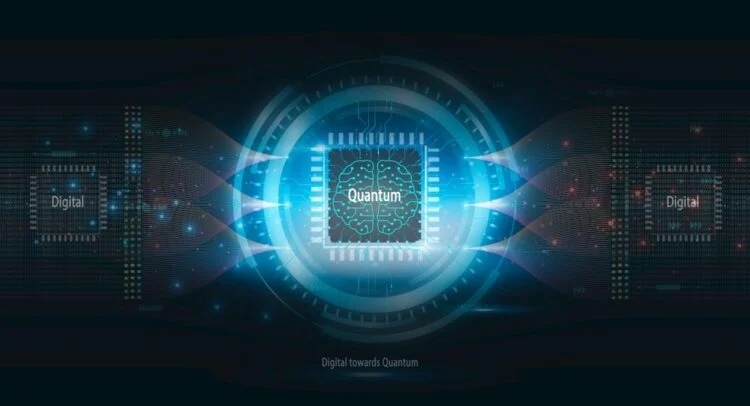
Why Quantum Is So Hard to Understand
There’s a truism among technology reporters: You can explain quantum physics either accurately or in a way people understand – but not both.

Quantum mechanics is an extremely intricate science that deals with the use of minute particles behaving in bizarre ways. These bizarre behaviors allow entrance into powerful new scientific capabilities.
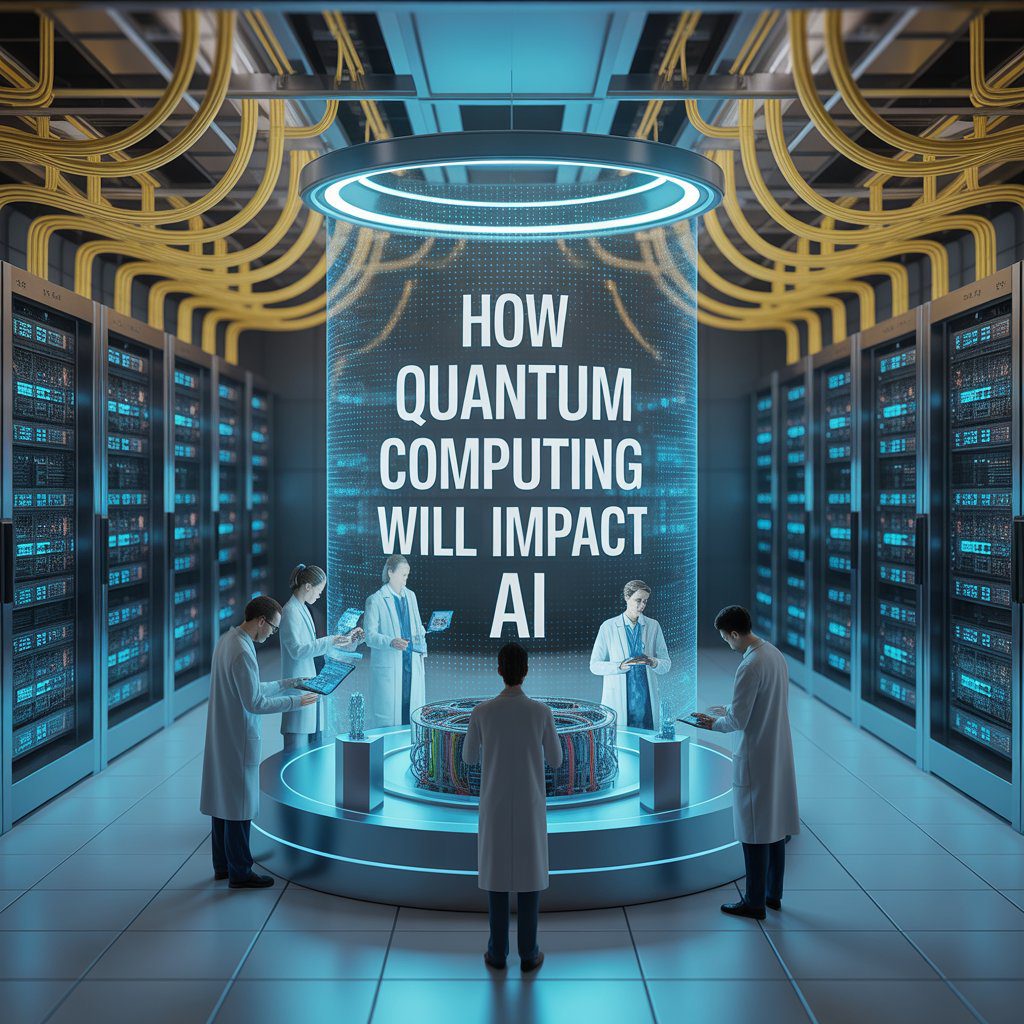
Why Quantum Is Less Famous Than AI
Despite major announcements from companies including Microsoft and Google, quantum technology still has a lower public profile than AI.
That’s partly because quantum is mostly associated with hardware like sensors and quantum computers, while AI is mainly software-based.
Huge Potential, But Still Uncertain
Forrester’s Brian Hopkins says that the combination of AI and quantum may someday create an extremely powerful new technology — but we’re not there yet. Current quantum computers simply aren’t strong enough to deliver on that promise.
Market Value and Technology Hype
The quantum industry could reach $97 billion by 2035, but AI is already valued in the trillions. Both are wrapped in hype — and concerns of a bubble.
The Biggest Challenge: Errors
Just as AI tools can “hallucinate,” quantum systems suffer from extreme sensitivity.
Quantum particles operate in fragile states that can be disrupted by tiny amounts of light, sound, or heat.
What Quantum Computers Look Like
Quantum machines do not take on the appearance of normal computers whatsoever. They are large, laboratory devices that often take the form of a metal chandelier hanging from the ceiling.
They need extremely cold temperatures and lasers. Some research groups even use synthetic diamonds to stabilize qubits.
Bold Predictions About Quantum’s Future
Today, there are only about 200 quantum computers in the world, but experts still make strong predictions.
Some claim they might one day solve problems in seconds that would take classical supercomputers the lifetime of the universe.
Revolutionizing Medicine, Chemistry, and Agriculture
Quantum computers could rapidly test millions of possible molecular combinations, thereby accelerating drug development processes dramatically.
Recently, Google said its new chip could solve in five minutes what would take the world’s fastest supercomputer 10 septillion years.
Quantum Sensors in Healthcare
Quantum sensors can measure with remarkable precision, and today are already utilized in atomic clocks.
They have been used by researchers in portable brain-scanning devices for children, allowing more natural and less restrictive testing.
Navigation and Energy Efficiency
Scientists are testing the “quantum compass” which can work underground, where GPS cannot.
The UK’s National Grid is studying how quantum might help manage fluctuating energy demand to prevent blackouts. Airbus is testing quantum algorithms to optimize aircraft cargo loading. Quantum simulations might also significantly enhance chemical processes such as fertilizer production.
A Major Concern: Breaking Encryption
All experts agree that quantum computers will eventually be able to break today’s standard encryption by testing every possible key in rapid succession. It’s believed that countries are stealing encrypted data now to decode later — what’s called “harvest now, decrypt later.”
Heading Toward Q-Day
Some analysts believe Q-day, which is the day quantum breaks modern encryption, may arrive around 2030. Companies like Apple and Signal have introduced post-quantum encryption, but data from previous communications remains vulnerable.
Data Breaches May Already Have Happened
A former chief of cryptography at GCHQ warned that almost all UK citizens might already have had sensitive data stolen by foreign adversaries, stored for future decryption once quantum computers become powerful enough.
Closing Remarks
Quantum technologies can revolutionize many fields by utilizing unique properties of quantum mechanics, such as superposition, entanglement, and quantum tunneling. Researchers believe that quantum computers could solve certain complex problems much faster than classical machines, enabling breakthroughs in areas like drug discovery, materials science, cryptography, and optimization. Quantum communications, on the other hand, may offer an unprecedented level of security with quantum key distribution, whereby eavesdropping would be very near impossible. Significant challenges persist at this time, including error correction, stability of the system, and scalability. Yet, ongoing progress indicates that quantum technology may soon move from theoretical to practical applications. Quantum technology might transform industries, reshape cybersecurity, and open new frontiers in scientific innovation.