

Tracking Adult Children: A Sign of Care or Lack of Trust?
More and more parents are using their phones to monitor their adult children. But is this acceptable—as long as the child agrees—or does it reflect parents having difficulty letting their children become independent?

Why Parents Feel the Need to Monitor Their Adult Children
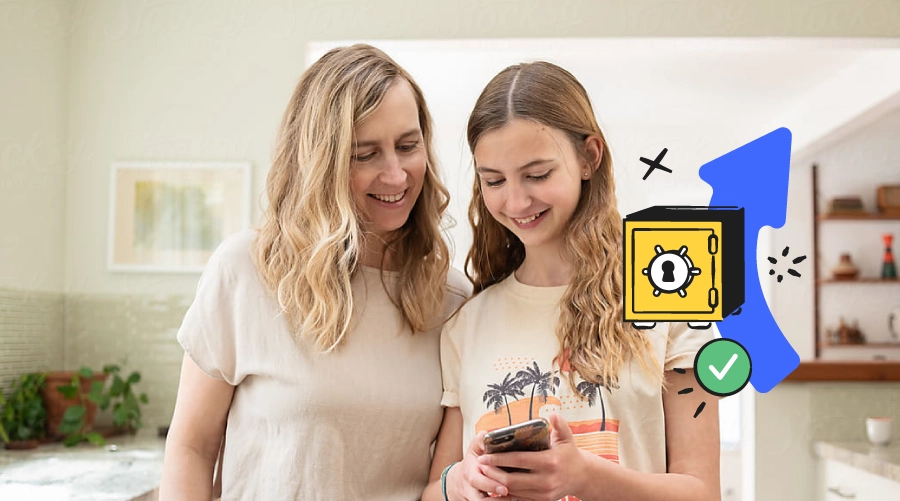
Steven Medway, age 53 and a father of two, has his entire family connected to a location-tracking app. He is puzzled why this has become a controversial issue among other parents.
He said the feature became especially helpful when his daughter Martha moved around 100 miles away for university.
“It makes her feel a little less far away,” he said. A survey by Unite Students, involving 1,027 parents of first-year university students across the UK, found that 67% use an app to track their child’s location, yet only 17% communicate with them daily.
Dr Martin Brunet, a GP and author who speaks about mental health online, said that while the decision is ultimately “personal,” he strongly encourages parents to allow their children more freedom. “One of the most difficult parts of parenting is letting go. Modern technology makes it easier not to do that, and I’m not sure it’s healthy,” he added.
Steven, who lives near Cardiff in Michaelston-y-Fedw, first installed Life360 when Martha—now 19—began spending more time outside their rural village with friends. Because they live in an isolated area, the app helped if she ever needed a ride home. And when she moved to the University of Reading in September, continuing the app felt natural to them.
“Martha goes to parties and gets back to her halls at 3:30 a.m. It’s fine—I’m not calling her to ask what she’s doing. When I wake up and see she’s back, I’m relieved. If she wasn’t, or her phone was still in the middle of town, then maybe I’d call.”
Martha is independent and has travelled alone through Japan for a month, as well as around Europe with friends. Steven says she has never turned the app off, but he would accept it if she chose to. “People assume I’m forcing her to be tracked. That’s not true. She can switch it off anytime—there’s no punishment.”
Balancing Independence and Parental Peace of Mind
Elsewhere, Maria Connolly, 56, uses a tracking app to check on her son Owain, 19, who recently moved from Swansea to Hertfordshire for university.
Owain is autistic, and Maria says he can sometimes be naive and struggle socially, so the app gives her peace of mind.
She checks it a couple of times a day to ensure he leaves his room and to monitor his phone battery so she can remind him to charge it.
Owain initially resisted, but Maria told him, “I pay your phone bill—if you want me to keep paying it, the app stays.” She tries to keep things lighthearted: “If I see you’re in Wetherspoons, tell me your table number and I’ll send you a drink.” Still, she admits the real purpose is safety.
Maria said she’d be disappointed if Owain chose to stop using the app but would respect it, even though she’d probably call and text him more often. “I’ve allowed him to be independent. I’m not constantly checking—it’s just a little safety net.
He’s not a child, but he’s my child.” For Steven, safety is also the main concern. He mentioned the triple fatal crash in St Mellons in 2023, where it took police two days to locate the vehicle.
“In emergencies, speed and accuracy matter. A tracking app gives us that—and it’s priceless.” He rejects the idea that tracking means he doesn’t trust his daughter. “If anything, it shows trust—you’re giving your family 24-hour access to your location.” The Unite Students survey also found that 71% of fathers use tracking apps for their university-aged children, compared to 59% of mothers.
The Impact of Technology on Modern Parenting and Anxiety
Another parent, Lianne Hannam from Cardiff, uses Life360 with her daughter Erin Mae (21) and son Ostyn Lee (15). Interestingly, it was Erin Mae who asked her mother to download it, since she and her friends were already using the app. Lianne finds it reassuring, especially since Erin Mae is a new driver and works some night shifts.
“It helps ease my worries. I can give her space because I know where she is.”
She says she’s not afraid of her children growing up—it’s the world around them that concerns her.
“The world is frightening.” Dr Brunet, however, believes that parents in the past did not worry more simply because they couldn’t track their children. “If you track them at university, will you still track them five years later? When does it end?”
He emphasizes that tracking companies sell the idea that monitoring children is a form of love and a way to reduce anxiety. But like many short-term fixes for anxiety, it may not be helpful in the long run. “If you grow a tree indoors without wind, it grows tall but weak. Children need exposure to challenges—with reasonable safety—to grow strong.”
Final Remarks
It says that though monitoring may emanate from a position of love and protection, excessive oversight erodes trust, hampers personal growth, and strains relationships. Growing children moving into adulthood require space to make independent decisions, handle the consequences of these decisions, and develop confidence in their capabilities. The article reassures that a healthy parent-child relationship depends more on communication rather than the need for surveillance. Ultimately, parents are called upon to support, direct only when approached for guidance, and trust their grown children with the conduct of their life choice, allowing independence to strengthen the relationship rather than weaken it.